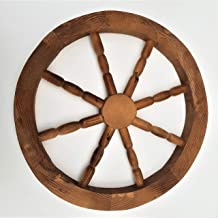
E’ uno dei popoli più antichi nella storia dell’uomo.
Chi ha inventato la ruota era sicuramente un tornitore; ancora non sapeva di esserlo, ma … era ovvio.
Il mestiere del tornitore non si studia … si impara, non si insegna … si ruba.
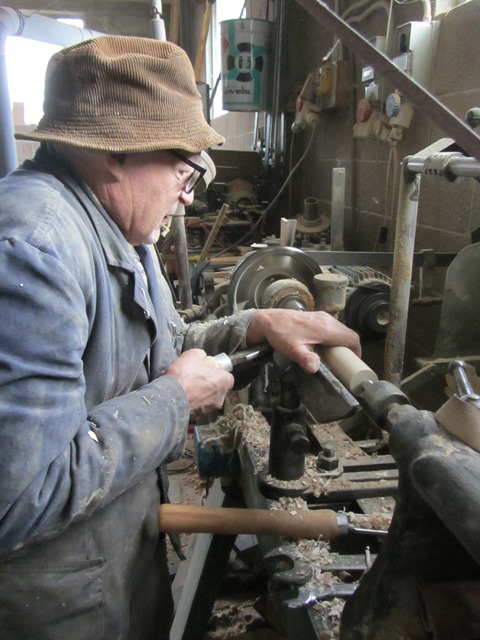
Ci vogliono anni di pratica ed esperienza, non esistono libri e la vecchia generazione del popolo dei tornitori non ha ricambio.
I “vecchi” sono di quelli veri, di quelli che lavorano a mano, che modellavano il legno secondo la loro abilità nel maneggiare scalpelli e utensili …
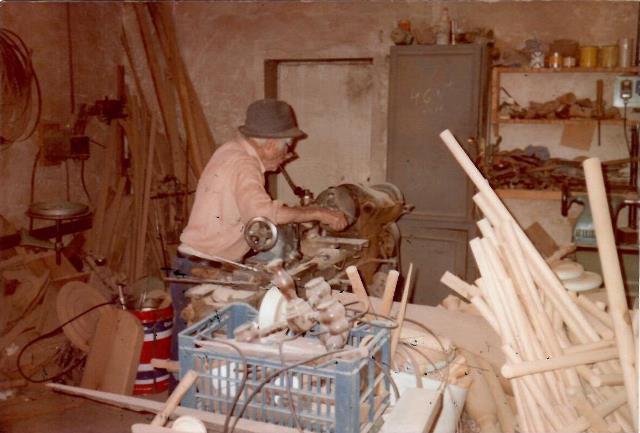
E’ gente dura che se non lavora si ammala: un tornitore, padre di un mio coetaneo si lamenta che da quando è in pensione e NON PUO’ PIU’ ANDARE A LAVORARE, stà male, non dorme, è come in crisi di astinenza … da lavoro??
EBBENE SI, DA LAVORO …
Sicuramente il mondo non si fermerà quando non ci saranno più tornitori del legno, ma chi si ricorderà di loro e di tutto il comparto produttivo collegato: costruttori di macchine, costruttori di utensili, produttori di semilavorati.
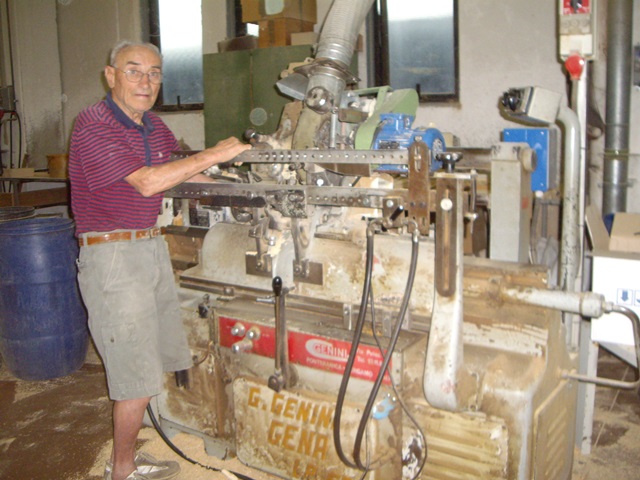
Come faranno i nostri nipoti e pronipoti a spiegare il lavoro del nonno? Cosa diranno? Mio nonno lavorava il legno??… TROPPO GENERICO!
Mio nonno era un artista: modellava il legno e produceva bellissime lampade, tavoli, sedie, articoli per la casa, soprammobili, oggettistica, vassoi, vasi …
Ognuno di noi ha sicuramente qualcosa da raccontare, qualcosa che non deve essere dimenticato.
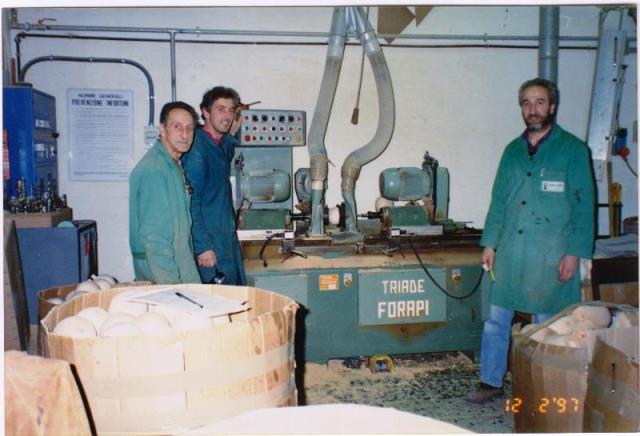
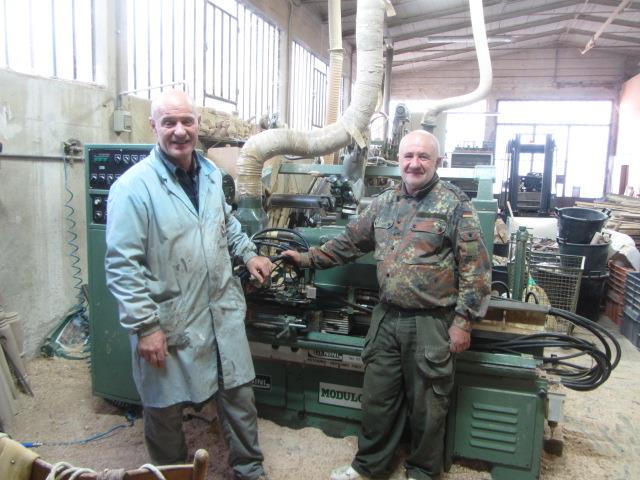
E’ necessario mantenere il ricordo di questo nostro lavoro, cosi importante, bello e di soddisfazione dagli anni del dopoguerra fino alla fine dello scorso secolo.
Per questo motivo ho pensato di raccogliere testimonianze, racconti, materiale fotografico di tutto ciò che può dare sviluppo e creazione al club.
I KAFIRI DEL XX SECOLO
Scritto nel Giugno 2007
English Version
THE WOOD TURNERS
This was one of the most ancient professions in the history of man.
Whoever invented the wheel was certainly a turner – he didn’t yet know it, but… it was destined to be.
The profession of wood turner is not studied, but learnt; it is not taught, but learnt through experience.
Years of practice and experience are required. There are no books and the old generation of turners cannot be replaced.
The “old turners” are the real ones, those who worked by hand, who shaped wood based on their skill in using chisels and tools.
Hard people who if they didn’t work fell ill: a turner, the father of one of my contemporaries, complained that since he has retired and CAN NO LONGER GO TO WORK, feels ill, doesn’t sleep; it’s like he has withdrawal symptoms… from work?
YES, FROM WORK
Certainly the world will not stop when there are no more wood turners, but who will remember them and the entire production sector: the machine constructors, the tool manufacturers and the producers of semi-finished products?
How will our grandchildren and great-grandchildren explain the work of grandpa? What will they say? My grandfather worked with wood? TOO GENERIC!
My grandfather was an artist, he shaped wood and produced very beautiful lamps, tables, chairs, household items, decorative objects, trays, vases…
Certainly, each of us has something to say, something that must not be forgotten.
We must keep a record of our work, which was so important and beautiful, and of great satisfaction in the period from after the war up to the end of the last century.
For this reason, I have decided to collect the records, tales and photographic material of everything that may help develop and create the club.
THE TWENTIETH-CENTURY KAFIRS
Written in July 2007


 I Kafiri del XX secolo
Bravo Mario,le tue analisi centrano sempre il pensiero di quegli artigiani che hanno vissuto con la passione per un lavoro che era una delle poche alternative di miglioramento ,e che col passare degli anni è diventato vita.
"Mi piace""Mi piace"